
What you pay could depend on what they know about you. Your search history. Where your phone is standing. How low your battery is.
New York City just voted to stop it.
On 12 November 2026, the New York City Council voted 44-5 for a bill barring retailers and other businesses from using surveillance pricing, The Record reported. That means using customers’ personal data to charge different people different amounts for the same product.
The bill is Introduction 891-A, sponsored by Council Speaker Julie Menin, according to the Council’s press release. It would bar companies from using New Yorkers’ personal data and algorithms to charge each person an individual amount.
Mayor Zohran Mamdani celebrated its passage, telling the media “when corporations use your personal data to decide what you pay, you only stand to lose,” The Record reported.
New York City is the second city in the country to pass such a ban. Seattle went first, with a similar ban signed into law in October 2026, according to The Record.
Sized Up At The Checkout
How does it work? The Council’s release admits surveillance pricing “is invisible to consumers, making it difficult to identify.” But it pointed to investigations.
One found a major grocery delivery platform running algorithmic pricing experiments that produced individualized differences “as high as 23 percent,” the Council said. Another found a television at one retailer went from $499.99 to $599.99 “when the consumer pulled into the store’s parking lot.”
And the Council says a behavioral economist who worked for a major ride-share company revealed that the app charges more when a consumer’s phone battery is low.
Your BATTERY. Read that again.
They don’t just want to know what you want. They want to know how badly you need it.
George Slover, senior counsel at the Center for Democracy and Technology, told The Record the practice is “viscerally offensive to consumers.” To be fair, The Record notes “public evidence is limited.” Lawmakers are acting anyway.
The Fines And The Fine Print
Under the bill, the city’s Department of Consumer and Worker Protection could investigate complaints and issue fines of up to $1,000 for each violation, the Council said, “with every consumer or transaction affected constituting a separate violation.”
Small businesses get a corrective action to avoid fines if they fix violations promptly. And “bona fide discounts and rewards that are legitimate and transparent” stay allowed, from buy-one-get-one-free deals and loyalty programs to discounts for veterans and students.
It is not in force yet. Grace Gedye, a Consumer Reports policy analyst who worked on the bill, told The Record that once it becomes law and takes effect, “eight million fewer people will have to guess” whether their search history and what they hover over online is shaping what they pay.
The fight is spreading. New Jersey, Connecticut and Maryland already have similar bans on the books, Slover told The Record. The New York state legislature passed a similar law, but Gedye said it has been sitting unsigned on the governor’s desk for several months.
And The Record reported that in October 2026 the Federal Trade Commission ordered nine food delivery, airline, ride-sharing and retail companies to answer extensive questions about how they use personal data to charge some consumers more.
One city council is pushing back on the data machine. Now ask yourself: what would this pricing logic do inside a cashless control grid, where every single payment is another data point?
Keep Your Spending Out Of Their Profiles
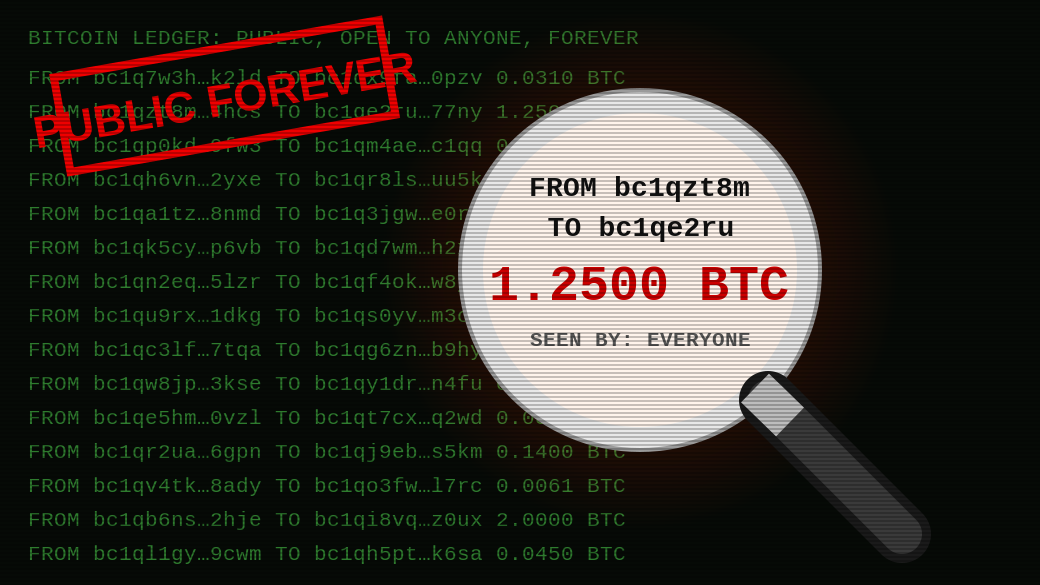
The Record reported that data brokers sell businesses detailed consumer profiles, including spending habits. A pricing ban is one fence. In our view, the less spending data you hand over, the less there is to sell.
Monero hides the sender, the receiver and the amount of each payment by default. A self-custody wallet keeps your keys on your own device, not with an exchange.
Monero One is a free, open-source, self-custody Monero wallet for iPhone and Android. Your keys stay on your device. The app sends us no analytics. Full disclosure: the host built Monero One. He’s biased. He’s also right.
How does Monero stack up against Bitcoin when it comes to your payment trail? Read Monero vs Bitcoin privacy.
Follow @MoneroOne on X and join the Resistance on Telegram (t.me/monero_one).
SOURCES
- The Record: NYC to bar surveillance pricing as momentum for bans grows nationwide
- New York City Council: New York City Council to Vote on Surveillance Pricing Ban
Join the resistance in style: get Monero One at no cost. It stays free.

Comments
Talk about this story with the resistance on Telegram.
Join the discussion