
At the Federal Reserve, a committee of twelve sets money policy. In Monero, new coins come out of a race that any computer can enter.
That race is mining. Miners build every block, check every payment and earn a reward that is set in the code. getmonero.org calls the goal “egalitarian mining, so that everyone can have the possibility to mine.”
Here is how it works, and why it matters WHO holds the hashrate.
What Monero Miners Do
The getmonero.org FAQ says it in one line: “Miners process transactions on the Monero network by mining blocks.”
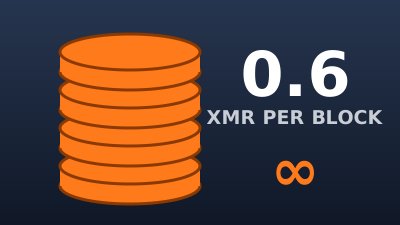
Each block’s miner is paid “the constant block reward of .6 XMR, and the transaction fees of the users who have transactions in that block.”
That 0.6 XMR is the tail emission, and it never runs out. Our tail emission explainer has the math.
Miners also enforce the rules. Every spend carries a key image, and the FAQ says “key images that are used more than once are rejected by the miners as double-spends.”
In Monero’s source code, blocks target 120 seconds, and newly mined coins stay locked for 60 blocks, about two hours.
RandomX: Built For Ordinary CPUs
An ASIC is a chip built for one job. The FAQ says ASICs “are very expensive and can be afforded by few. This leads to few entities owning a big amount of the hashrate.” In February 2018, the project warned that such hardware is designed “by a few companies,” and “This creates a single point of failure.”
From April 2018 to March 2019, the developers tweaked the proof of work at each network upgrade. Those tweaks were “merely meant as a stopgap,” the project said later.
The long-term answer arrived on 30 November 2019, at block 1,978,433: RandomX. Its developers call it “a proof-of-work (PoW) algorithm that is optimized for general-purpose CPUs.” Moneropedia states the goal: “to discourage the use of specialized hardware (like ASICs) for mining Monero.”
Graphics cards? The RandomX README says “GPUs are at a disadvantage,” and getmonero.org calls them “much less efficient” than CPUs for Monero.
The rules favor ordinary computers over custom chips.
But resistance is not a force field. The FAQ says RandomX “strongly reduces the efficiency of ASICs,” not that it stops them. And a January 2026 design note for RandomX version 2 says that one version 1 instruction “costs up to 10% of hashrate on Ryzen CPUs. This is where an ASIC or a specially designed CPU can get an easy advantage.”
So the developers released RandomX v2 on 25 March 2026. The FCMP++ stress-test release of September 2026 lists “RandomX v2 support.” For the main chain, RandomX v2 is only proposed. A pull request to “support RandomX V2” in the v17 upgrade has been open since 14 August 2025, and on 19 October 2026 it was still not merged. No date is set. Our FCMP++ explainer covers that test network.
Solo, Pool Or P2Pool
There are three ways in.
Solo. You run the Monero software and mine alone. The GUI and CLI wallets can do it, “CPU only.” The Monero Project calls solo mining “the most effective way to increase the robustness of the Monero network.” But getmonero.org warns that “it might take months before you find a block.”
A pool. Many miners combine their hashrate and share the rewards. The costs, per getmonero.org: “You have to pay a fee to the pool operator.” And: “Too many people mining on a single pool might lead on the pool having >50% of the total hashrate, which is dangerous.”
P2Pool. This is a pool with no operator. “Monero P2Pool is live on the Monero network,” the project announced on 5 October 2021. To mine on it, the P2Pool README says, “a synced Monero node” is required. getmonero.org says “there is no pool wallet; funds are never in custody.” Payouts come “directly via the coinbase transaction reward,” the launch post says. That is the transaction that creates each block’s new coins. The README sums it up: “no pool admin.”
At the launch, the project noted that “one pool accounts for almost 40% of Monero’s network hashrate.”
“Mining using P2Pool is also encouraged,” says getmonero.org.
XMRig, The Common Miner
getmonero.org lists two mining programs: XMRig and CSminer. XMRig calls itself a “high performance, open source, cross platform RandomX, KawPow, CryptoNight and GhostRider unified CPU/GPU miner and RandomX benchmark.”
Read XMRig’s fine print: “Default donation 1% (1 minute in 100 minutes).” getmonero.org warns that “some miners may have developer fees.”
The Monero Project “does not endorse any particular pool, software, or hardware.” Neither do we.
Monero Hashrate: How Big Is The Network?
The hashrate is the number of guesses per second that all miners make together. You estimate it from the difficulty: divide by the 120-second block time.
On 19 October 2026, at 04:43 UTC, the xmrchain.net explorer showed a difficulty of 788,204,742,288 and a hashrate of 6.568 GH/s. That is about 6.57 billion hashes per second.
Who holds that hashrate? The shares below are self-reported. Each is the hashrate that a pool’s own site reports, as listed by miningpoolstats.stream at 04:46 UTC on 19 October 2026:
- SupportXMR: 32.3%
- Nanopool: 18.4%
- Kryptex: 17.5%
- HashVault: 10.7%
- P2Pool (its main, mini and nano chains together): about 7.6%
The top three pools reported 68.2% between them. No listed pool reported half.
No committee sets this number. Miners add to it, one machine at a time.
September 2025: The Qubic Rollback
In August 2025, Qubic, a “layer-1 blockchain,” said it had “completed its attempt to dominate the Monero network,” Cointelegraph reported on 12 August 2025. Qubic claimed it reached 51% of the hashrate on 11 August 2025. The push coincided with a “six-block-deep chain reorganization that discarded 60 previously valid blocks.” Developers argued that “the reorganization alone does not prove a successful 51% attack.”
In a reorganization, or reorg, the chain swaps its latest blocks for a rival chain “that is longer or has higher cumulative work,” in Cointelegraph’s words.
Then came 14 to 15 September 2025. Decrypt reported that at block height 3,499,659, “mining pool Qubic released a hidden chain that overtook the main network.” The network reorganized 18 blocks, “erasing 36 minutes of transaction history and invalidating 118 transfers, according to independent monitors.” Cointelegraph counted “around 117 transactions” over “roughly 43 minutes.”
Decrypt said the rollback “reignited concerns over selfish mining.” That is when a miner “withholds blocks they find and later publishes a longer chain.”
Monero’s code makes received coins wait 10 blocks before they can be spent. This rollback ran 18 blocks.
Decrypt reported that other users “urged miners to move to smaller pools.” On GitHub, a proposal for “Temporary rolling DNS checkpoints” opened on 31 August 2025. It says DNS checkpoints “could prevent deep blockchain re-organizations, but Monero’s blockchain consensus protocol would temporarily be less decentralized.” As of 19 October 2026, that proposal is still open.
The project’s standing advice spreads the hashrate out: solo mining and P2Pool.
Mining Made The FATF’s List
The technocrats at the FATF have noticed mining too. Its July 2026 update on virtual assets says many jurisdictions are “imposing additional restrictions on higher-risk activities such as anonymity-enhancing services, privacy coins, mining, or custody.”
Mining. Filed right next to privacy coins.
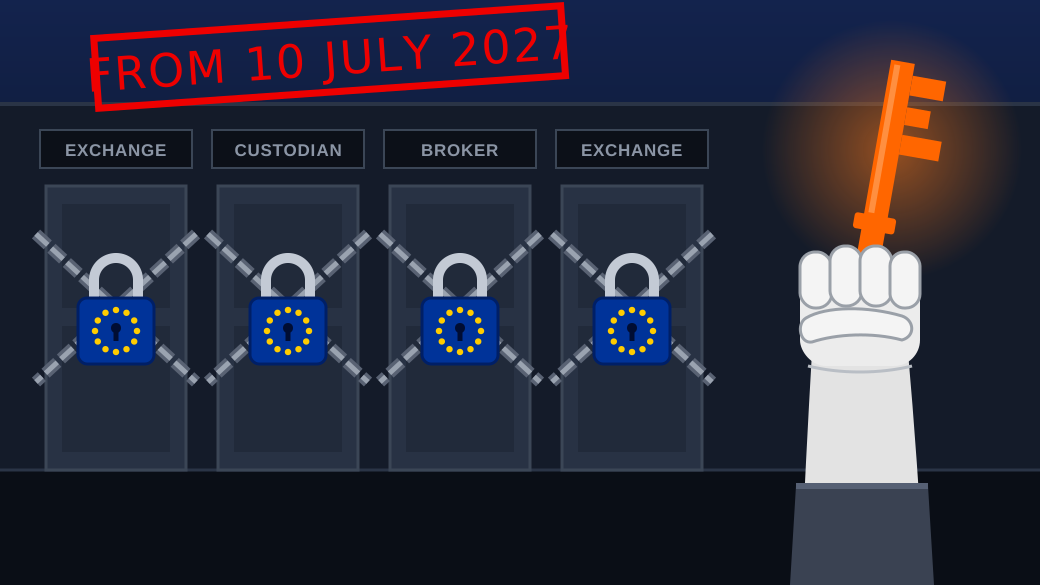
FATF sets standards. Governments write the laws. For the EU’s 2027 rule, read what it bars, and what stays legal.
Laws differ by country, so check yours. This is not legal advice.
Mine It, Then Hold It Yourself
Whatever you mine, the coins are yours only while you hold the keys. Keep your XMR in a self-custody wallet such as Monero One. Full disclosure: the host built Monero One. He’s biased. He’s also right.
Running a node for P2Pool? Your wallet can use it too. Read what a remote node sees, and how to use your own node.
New to Monero? Start with what Monero is.
Follow @MoneroOne on X and join the Resistance on Telegram (t.me/monero_one).
SOURCES
- getmonero.org: Mining (solo, pools, P2Pool, software)
- getmonero.org: FAQ (miners, block reward, ASICs, RandomX)
- Moneropedia: RandomX
- GitHub, tevador/RandomX: README
- GitHub, tevador/RandomX: RandomX v2 design note (January 2026)
- GitHub, tevador/RandomX: release v2.0 (25 March 2026)
- GitHub, monero-project/monero: pull request 10038, RandomX V2 in v17 (opened 14 August 2025)
- GitHub, seraphis-migration/monero: FCMP++ stressnet release v0.19.0.0-beta.3.0 (September 2026)
- getmonero.org: PoW change and key reuse (11 February 2018)
- getmonero.org: A note on scheduled upgrades (1 September 2020)
- Monero source: block time, difficulty window and unlock constants (cryptonote_config.h)
- getmonero.org: P2Pool released (5 October 2021)
- GitHub, SChernykh/p2pool: README
- GitHub, xmrig/xmrig: README
- xmrchain.net: Monero block explorer (difficulty and hashrate, 19 October 2026)
- miningpoolstats.stream: Monero pools (19 October 2026)
- Cointelegraph: Qubic claims 51% of Monero’s hashrate (12 August 2025)
- Decrypt: 18-block Monero reorg erases 36 minutes of history (15 September 2025)
- Cointelegraph: 18-block reorg, around 117 transactions (15 September 2025)
- GitHub, monero-project/monero: issue 10064, temporary rolling DNS checkpoints (opened 31 August 2025)
- FATF: Targeted Update on Virtual Assets and VASPs (July 2026), PDF copy hosted by the FIAU Malta
- Federal Reserve: About the FOMC
Join the resistance in style: get Monero One at no cost. It stays free.

Comments
Talk about this story with the resistance on Telegram.
Join the discussion