
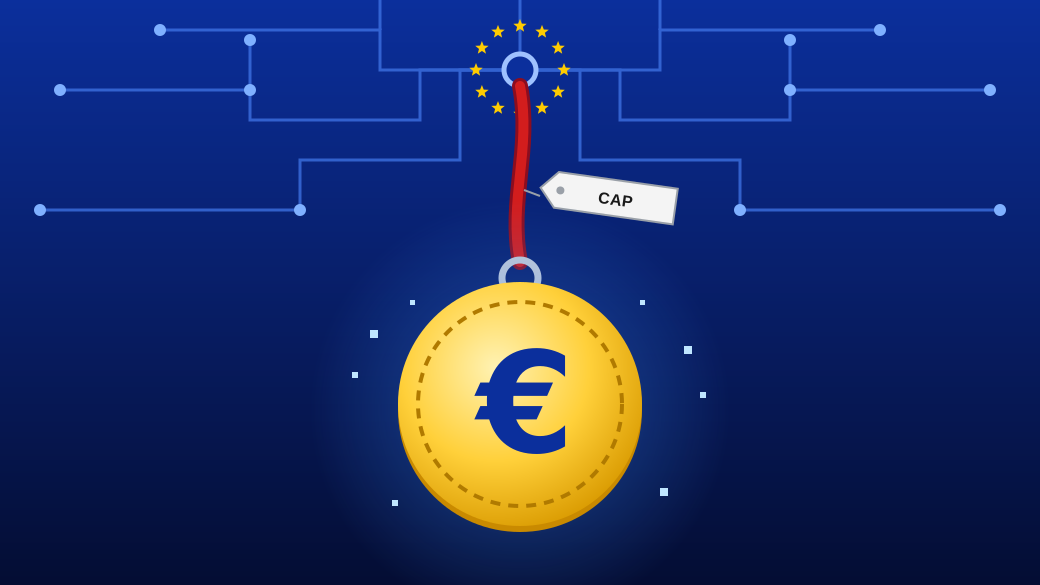
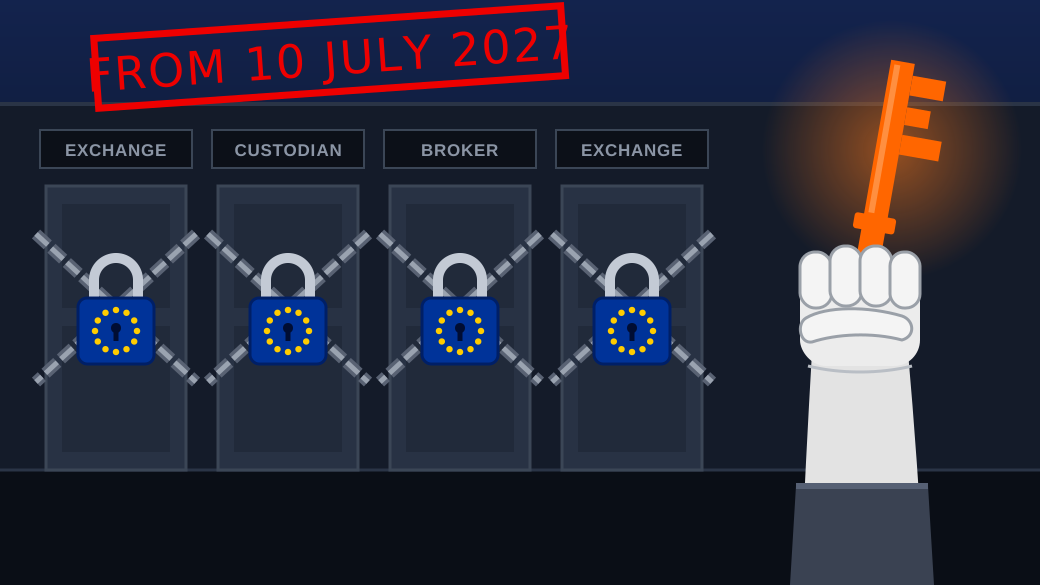
The Brussels bureaucrats don’t split hairs. From 10 July 2027, EU law bars licensed exchanges and custodians from keeping accounts that allow “anonymity-enhancing coins.” Cointelegraph reads that as coins “such as Monero (XMR) and Zcash (ZEC).”
The headlines lump them together. The two coins are built very differently.
Here are the facts, side by side. No spin at either team. The spin is for the surveillance state.
The Short Version
- Default. Every Monero payment hides the sender, the receiver and the amount. On Zcash, privacy depends on the address type.
- Shielded share. On 17 October 2026, about 29% of all ZEC sat in shielded pools, by the pool totals that Zcash nodes report.
- Setup. Zcash’s first shielded proofs needed a trusted setup ceremony. Its Orchard pool, from May 2022, does not. Monero’s range proofs, Bulletproofs, need none.
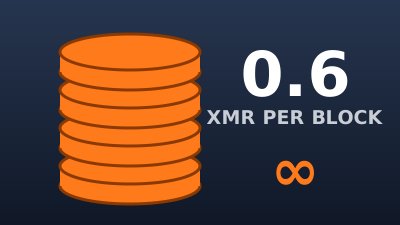
- Supply. Zcash stops at 21 million coins. Monero pays 0.6 XMR a block, forever.
- Exchanges. Both have lost listings. Binance dropped Monero in February 2024. It kept Zcash after a review in July 2025, and still listed ZEC trading pairs on 19 October 2026.
Privacy By Default Vs Privacy By Choice
Monero hides the sender, the receiver and the amount on every payment. Stealth addresses hide the receiver. Ring signatures hide which coin was spent. RingCT hides the amount, and Moneropedia says it “became mandatory for all transactions on the network” after September 2017. Our Monero explainer shows how the three work together.
Zcash gives users a choice. Its documentation says Zcash has “two types of addresses: private (z-addresses) and transparent (t-addresses).” The docs explain the difference:
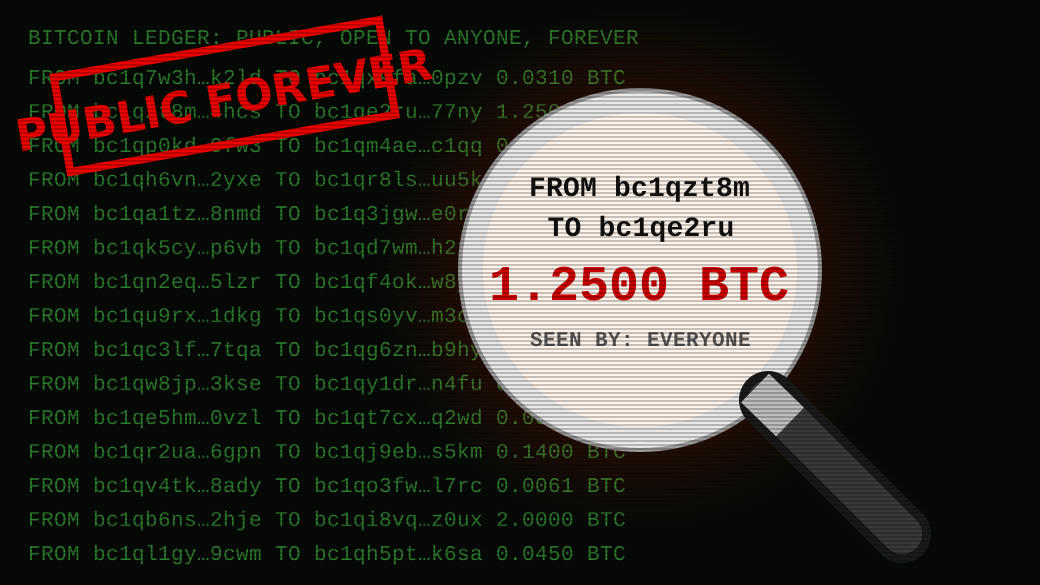
- Transparent to transparent payments “work just like Bitcoin: the sender, receiver and transaction value are publicly visible.”
- Shielded to shielded payments encrypt “the sender and receiver addresses and transaction amount.” The chain still shows that a payment happened, and what fee it paid.
Crossing between the two sides costs privacy. The docs warn: “There are privacy implications of shielding or deshielding information through these transactions.” ZIP 224, the design document for the Orchard pool, is blunter: “Spending funds residing in the Orchard pool to a non-Orchard address will reveal the value of the transaction.”
Both coins let you open your books to someone you choose. Monero has view keys. Zcash has viewing keys for “selective disclosure.”
Monero has no privacy switch. Zcash puts the switch in your hand.
How Much Zcash Is Shielded?
Here is a dated number. On 17 October 2026, at block 3,521,497, the ZecZcash tracker showed “29.21% of supply shielded,” or about 4.96 million ZEC. Another 70.4%, about 11.96 million ZEC, sat in transparent addresses. The last 0.4% sat in a protocol fund, the “lockbox.” Blockchair’s node data for the same block gives the same pool balances.
That is a share of coins, not of payments.
Most of the shielded ZEC, about 4.12 million, sat in Zcash’s newest pool, Ironwood. ZIP 258 says the NU6.3 upgrade of 28 July 2026 “introduces the Ironwood shielded pool,” and that “the Orchard pool can only be spent from (not added to).” ZIP 2005 describes a change to Ironwood’s notes, “designed to improve Zcash’s long-term resilience against a significant potential threat to its security from quantum computers.”
For Monero, the same question has a short answer. Since September 2017, every payment hides its amount with RingCT.
The Trusted Setup, And How Zcash Moved Past It
Zcash launched on 28 October 2016. ZIP 224 says its Sprout and Sapling circuits use a proof system, Groth16, “that requires a ‘trusted setup’.” The risk: the setup leaves a hidden structure “that if known could be used to create fake proofs and thus counterfeit funds.”
So Zcash made its parameters in multiparty ceremonies. They stay safe “as long as at least one participant was honest and not compromised,” ZIP 224 says. The Sprout ceremony had 6 participants. The Sapling ceremony, two years later, had “around 90 per round.” The 2016 ceremony write-up, now hosted at zodl.com, gave the secret its nickname: “We call the private key ‘the toxic waste’.”
Then came Halo 2. The NU5 upgrade activated on 31 May 2022, at block 1,687,104, and opened the Orchard pool. Orchard uses the Halo 2 proof system. ECC’s January 2021 explainer, also now at zodl.com, says Halo 2 “eliminates the trusted setup.”
Zcash added a safety net too. ZIP 224 says a “transparent turnstile,” which tracks the value that enters and leaves the pool, combined with checks “that each pool’s balance cannot be negative,” ensures that “any potential counterfeiting bugs in the Orchard protocol or implementation are contained within the Orchard pool.”
Monero’s range proofs, Bulletproofs, went live in the October 2018 network upgrade. Moneropedia says they “require no trusted setup.”
Zcash built its way past the ceremony. Monero’s Bulletproofs never needed one.
Supply And Emission
Zcash has a cap. Its docs say: “Like Bitcoin, Zcash has a fixed total supply of 21 million units.” Blocks have targeted 75 seconds since the Blossom upgrade of 11 December 2019. Under the ZIP 208 schedule, the block reward halved on 18 November 2020, and again on 23 November 2024.
Part of each block reward goes to two funds. Since the NU6.1 upgrade of 24 November 2025, ZIP 1016 sends 8% of block rewards to Zcash Community Grants. Another 12% goes to a fund “controlled by decisions of coin holders.” That lasts until the third halving.
Monero has no cap. Since 9 June 2022, the tail emission has fixed the base reward at 0.6 XMR per block, with no end date. That adds under 1% a year, and the rate falls every year. Blocks target two minutes. The project’s About page says “no portion of the block reward goes to development.” Read our tail emission explainer and how Monero mining works.
No central bank committee sets either schedule.
Where Each Coin Stands With Exchanges
The licensed doors have been closing on both coins, but not at the same pace:
- 2018: Japan’s Coincheck delisted Monero, Dash, Zcash and Augur.
- February 2023: Dubai’s VARA issued rules that ban licensed firms from offering trading in privacy coins “such as Monero and Zcash,” Elliptic reported.
- 27 December 2023: OKX blocked deposits of XMR, ZEC and six other coins, ForkLog reported.
- 4 January 2024: Binance put monitoring tags on coins, “including privacy-focused Monero and Zcash,” ForkLog reported.
- 20 February 2024: Binance delisted Monero.
- 31 October 2024: Kraken stopped Monero for clients in the EEA.
- 9 July 2025: Binance removed Zcash’s monitoring tag after a review and kept it listed, U.Today reported.
- 2 September 2025: the date Kraken gave for ending Monero trading for Canadian clients.
- 19 October 2026: Binance’s public market data listed ZEC pairs as “TRADING.” No XMR pair was trading.
Elliptic’s report also noted that New York’s financial regulator, the NYDFS, let licensed firms offer “limited services in privacy coins such as Zcash,” where they “can apply blockchain analytics capabilities to monitoring unshielded transactions.”
The surveillance state tolerates what it can watch.
From 10 July 2027, the EU rule covers both coins, on Cointelegraph’s reading. Read what the EU rule bars, and what stays legal.
The Bottom Line
Zcash gives you a privacy setting. Monero makes privacy the only setting.
Monero’s next big upgrade, FCMP++, would replace today’s ring of 16 with a proof over every output on the chain. It is still on a test network. Our FCMP++ explainer has the status.
And the Brussels bureaucrats want both coins off the licensed shelves.
Hold Your Own Keys
Whatever the regulators decide, keep your XMR in a self-custody wallet such as Monero One. Full disclosure: the host built Monero One. He’s biased. He’s also right.
Want the wider field? Read Best Private Cryptocurrencies in 2026.
Follow @MoneroOne on X and join the Resistance on Telegram (t.me/monero_one).
SOURCES
- Moneropedia: RingCT
- Moneropedia: Bulletproofs
- getmonero.org: About Monero
- Zcash documentation: Zcash basics (addresses, supply, history)
- ZIP 206: Deployment of the Blossom Network Upgrade
- ZIP 208: Shorter Block Target Spacing (halving schedule)
- ZIP 224: Orchard Shielded Protocol (trusted setup, Halo 2, pool balances)
- ZIP 252: Deployment of the NU5 Network Upgrade
- ZIP 255: Deployment of the NU6.1 Network Upgrade
- ZIP 258: Deployment of the NU6.3 Network Upgrade
- ZIP 2005: Ironwood Quantum Recoverability
- ZIP 1016: Community and Coinholder Funding Model
- ECC: The design of the ceremony (26 October 2016), now hosted at zodl.com
- ECC: Technical explainer, Halo on Zcash (8 January 2021), now hosted at zodl.com
- ZecZcash: Shielded supply tracker (observed 17 October 2026, block 3,521,497)
- Blockchair: Zcash block 3,521,497, node data with value pools (17 October 2026)
- zcashexplorer.app: Zcash block 653,600, Blossom (11 December 2019)
- zcashexplorer.app: Zcash block 1,046,400, first halving (18 November 2020)
- zcashexplorer.app: Zcash block 1,687,104, NU5 (31 May 2022)
- zcashexplorer.app: Zcash block 2,726,400, second halving (23 November 2024)
- zcashexplorer.app: Zcash block 3,146,400, NU6.1 (24 November 2025)
- zcashexplorer.app: Zcash block 3,428,143, NU6.3 (28 July 2026)
- Springlex: AMLR Article 79
- Cointelegraph: EU AMLR and privacy tokens
- Bitcoinist: Coincheck confirms delisting of privacy coins (2018)
- Elliptic: Dubai’s VARA rolls out digital asset rules, including a privacy coin ban
- VARA rulebook: Prohibited Virtual Assets (effective 7 February 2023)
- ForkLog: OKX to delist privacy coins (29 December 2023)
- ForkLog: Binance adds monitoring tags to Zcash and Monero (4 January 2024)
- Decrypt: Binance finalizes Monero delisting (20 February 2024)
- Kraken: Support for Monero (XMR) in Europe
- Kraken: Notice of delisting XMR, Canada
- U.Today: Binance removes the monitoring tag from Zcash (9 July 2025)
- Binance: public spot market data for ZECUSDT and XMRUSDT (checked 19 October 2026)
Join the resistance in style: get Monero One at no cost. It stays free.
Comments
Talk about this story with the resistance on Telegram.
Join the discussion