

Every time you spend Monero today, your coin hides in a crowd of 16. Your real coin, plus 15 decoys.
Monero’s developers want that crowd to be EVERY output on the chain. More than 150 million of them.
The upgrade is called FCMP++. It is in public testing right now. It is NOT live on the main network, and nobody has set an official date.
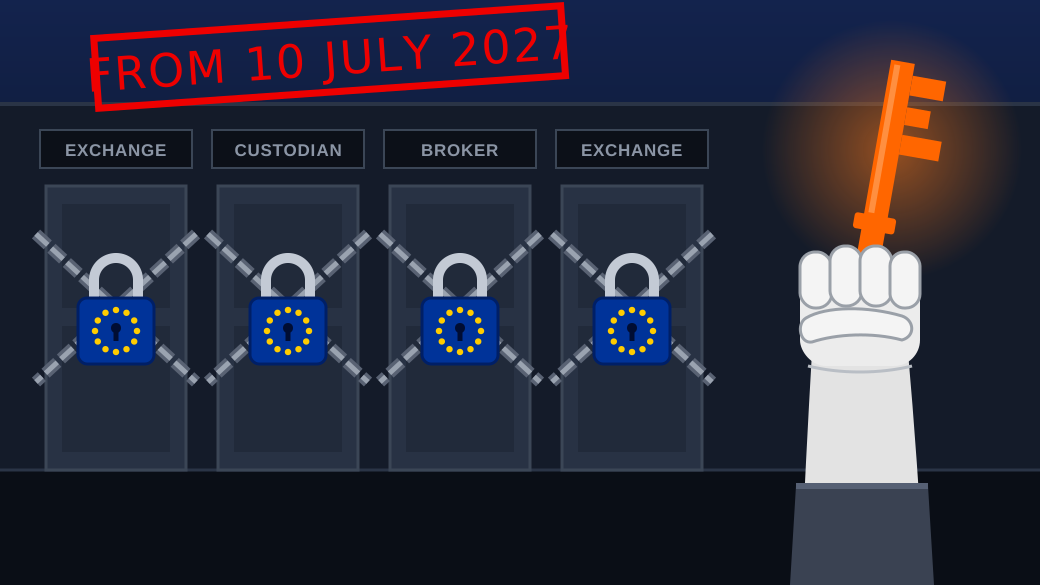
From 10 July 2027, EU law will bar licensed exchanges and custodians from keeping accounts that allow “anonymity-enhancing coins.” Meanwhile, the coders are building a bigger crowd.
What The Letters Mean
FCMP++ grew out of “FCMPs+SA+L,” which getmonero.org describes as Full-Chain Membership Proofs plus Spend Authorization plus Linkability.
getmonero.org explained the idea on 27 April 2024: “Full-Chain Membership Proofs, as a concept, is a replacement for rings within the Monero protocol.”
The FCMP++ design was proposed in March 2024, “in response to the spam attacks ongoing at the time,” the same post says. A companion upgrade called Carrot is the new addressing protocol that goes with it.
Why Retire The Ring Of 16?
Since the network upgrade of 13 August 2022, every Monero spend has used a ring of 16.
Rings work. But getmonero.org lists their weak spots. Rings are “vulnerable to attacks such as the EAE attack, have difficulties upon chain reorganizations, and in general enable statistical analysis (mitigated by distribution of the decoy selection algorithm).”
Translation: with 16 candidates, a chain watcher can play the odds.
Full-chain proofs “prove the output spent is one of any output on the chain, effectively removing all of these risks,” the post says.
How big is “any output on the chain”? In April 2024, getmonero.org put the jump at “16 to 100,000,000.” The test release of 25 September 2026 says your proof would cover “1 of the 150 million+ Monero outputs from across the entire Monero blockchain.”
From 16 to more than 150 million. That’s the crowd they’re building.
Where It Stands: Testing, Not Live
Here is the record, from the developers’ own GitHub releases and meeting logs:
- 27 September 2025: the first public test software came out. The developers called that “alpha stressnet” the “first live network testing the FCMP++ and Carrot integration open to the public.” A stressnet is a public test network for stress-testing new code.
- 28 April 2026: the beta stressnet followed.
- 25 September 2026: beta version 3.0 came out, adding “Hot-Cold wallet support” and “RandomX v2 support.”
- 5 October 2026: the v3.0 stressnet forked from Monero’s testnet at block 3,102,800. That number is a block height on the test chain, not on the main chain. At that day’s developer meeting, the update was: “FCMP++ fork is activated on beta stressnet v3.” A second fork, set for block 3,103,520, was due to stop old-style transactions entirely.
- 7 October 2026: at the research meeting, a developer said: “I haven’t seen any reports of unknown/unsolved issues since the fork from testers yet.”
That’s a TEST network, with test coins. Your coins on the main chain still use the ring of 16.
Testers find bugs and the developers fix them. That is what a stress test is for. The v3.0 release notes list “Bug fixes from beta stressnet v2.” At the 7 October 2026 research meeting, a developer said the two notable issues reported so far came from the GUI binaries, and a fix was already known.
The audits are not done either. Donors funded a 500 XMR audit of the integration code in three phases. On 19 October 2026, its page showed “Completed 0 of 3 milestones.”
So When Does It Go Live?
There is no official date. The getmonero.org roadmap lists “Full-Chain Membership Proofs” under “Coming Soon.” In the test code, the mainnet fork entries are labelled “Mock values for tests.”
The closest thing to a date is one developer’s non-binding draft plan, which the research meeting agendas link to. It says: “According to this planner, FCMP++/Carrot will activate in week 17 of 2027.” The same file warns: “This plan is a non-binding working draft. I make no guarantee of its accuracy.” No date is set.
Write that in pencil. Not pen.
What Changes For You
Here is what the developers’ own documents say changes when it ships:
- A bigger crowd. Your spend would point at the whole chain, not at 15 decoys.
- Your address keeps working. Carrot “maintains backwards compatibility with existing addresses,” and “No wallet key migration is required.”
- A shield against future code-breakers. The Carrot spec says it can hide “all transaction details (sender, receiver, amount)” from an observer who can break elliptic curves, “e.g. quantum computers,” as long as that observer does not know the receiver’s addresses.
- Full view-only wallets, for new wallets. Today a view key shows incoming payments, and Moneropedia says “outgoing transactions cannot be reliably viewed as of June 2017.” Wallets made with Carrot’s new key setup can have a view-only mode that lists “all incoming and outgoing transactions.”
- New software. When a real date comes, update your wallet and node before the fork. Before the September 2017 upgrade, getmonero.org said that any version other than v0.11.0.0 “will get booted off the network.”
- Hardware wallets wait. On the current stressnet, hardware wallet support, multisig and transaction proofs are “not yet functional.”
FCMP++ changes what the chain shows. Your IP address is a network matter. As a Monero community figure told Decrypt in September 2024, “protecting your IP address is key.”
Until Then
Today’s ring of 16 still guards your spends. Whatever the date, keep your keys in a self-custody wallet such as Monero One. Full disclosure: the host built Monero One. He’s biased. He’s also right.
Want the mechanics of the ring you use today? Read how ring signatures work.
Follow @MoneroOne on X and join the Resistance on Telegram (t.me/monero_one).
SOURCES
- getmonero.org: Full-Chain Membership Proofs development (27 April 2024)
- Carrot specification
- Monero 0.18.0.0 release: ring size 16 from the 13 August 2022 upgrade
- GitHub: FCMP++ and Carrot stressnet releases
- GitHub: alpha stressnet v1 release notes (27 September 2025)
- GitHub: beta stressnet v3.0 release notes (25 September 2026)
- Stressnet v3.0 source: fork heights (hardforks.cpp)
- Monero Tech Meeting #188 log (5 October 2026)
- Monero Research Lab meeting log (7 October 2026)
- Monero CCS: FCMP++ Integration Audit
- getmonero.org: Roadmap
- GitHub: FCMP++/Carrot plan, non-binding working draft
- Moneropedia: View key
- getmonero.org: September 2017 protocol upgrade notice
- Decrypt: Monero expert fact-checks the Chainalysis video (10 September 2024)
- EUR-Lex: AMLR, Regulation (EU) 2024/1624, official text
- AMLR Article 79, Official Journal text mirror (Springlex)
- AMLR Article 90, entry into force and dates (Springlex)
Join the resistance in style: get Monero One at no cost. It stays free.

Comments
Talk about this story with the resistance on Telegram.
Join the discussion