
Search “monero eu” or “monero ban” and you will find headlines about a BAN.
So is Monero banned in the EU? No. As of 19 October 2026, the EU rule behind those headlines does not ban owning Monero, or keeping it in your own wallet.
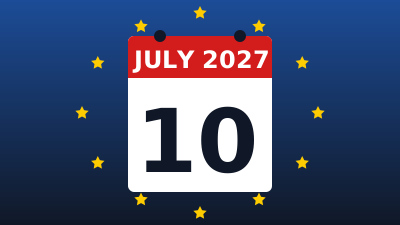
What the Brussels bureaucrats HAVE done is aim a new rulebook at the licensed doors. It applies from 10 July 2027. Here is what it says, who it binds, and what else starts that day.
The Rule In One Sentence
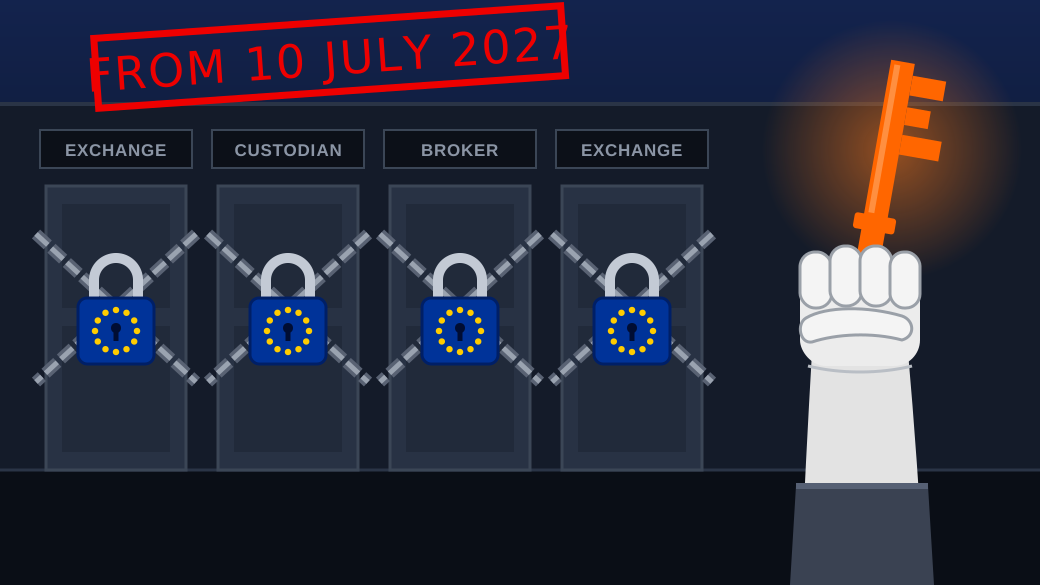
The law is the EU’s Anti-Money Laundering Regulation, or AMLR: Regulation (EU) 2024/1624. Article 79(1) bars “credit institutions, financial institutions and crypto-asset service providers” from keeping accounts that allow “the anonymisation or increased obfuscation of transactions, including through anonymity-enhancing coins.”
In plain words: a licensed exchange or custodian in the EU may not keep accounts that allow those coins.
Article 79 never names Monero. Cointelegraph reads it as covering coins “such as Monero (XMR) and Zcash (ZEC).” Here is how those two coins compare.
For the full text of Article 79(1) and its companion rules, read our news report, Globalist EU Moves To Cut Monero Off From Exchanges.
The Dates Brussels Set
Searching “monero 2027”? These are the dates in the law:
- 19 June 2024: the AMLR is published in the EU’s Official Journal (L series, 2024/1624).
- 9 July 2024: it enters into force, “on the twentieth day following that of its publication,” says Article 90. The EU’s official record of the law gives the same date.
- 10 July 2027: it applies, Article 79 included.
- 10 July 2029: it applies to football agents and professional football clubs. Article 90 gives those two groups two more years.
Football clubs get until 2029. Crypto firms get 2027.
A Regulation, Not A Directive
This detail matters. The EU’s own guide says a regulation “is a binding legislative act. It must be applied in its entirety across the EU.”
A directive works differently. There, “it is up to the individual countries to devise their own laws on how to reach these goals.”
So Article 79 does not wait for each national parliament to write its own version. One rulebook. Every member state. One date.
The technocrats wrote one rule for the whole bloc.
Is Monero Legal In The EU? Who The Rule Binds
Article 79(1) names three groups: credit institutions, financial institutions and crypto-asset service providers. In plain words: banks, other financial firms, and licensed crypto businesses such as exchanges and custodians.
You are not on that list. The rule is about accounts that those firms keep. A self-custody wallet is software on your own device. It is not an account at a firm.
So, as of 19 October 2026, under Article 79:
- Owning Monero stays legal.
- Keeping it in a self-custody wallet stays legal.
- Mining and running a node are not in the text of Article 79. Read how Monero mining works.
Your own country’s laws still apply. This is not legal advice.
The Cash Cap Starts The Same Day
The same regulation reaches into your paper money too. Article 80(1) says persons trading in goods or providing services “may accept or make a payment in cash only up to an amount of EUR 10 000.” That covers one payment, or “several operations which appear to be linked.” And member states “may adopt lower limits.” The cap does not cover “payments between natural persons who are not acting in a professional capacity.”
That cap also applies from 10 July 2027.
A wall around privacy coins. A ceiling on cash. Same day.
Meanwhile, on 9 July 2026, the European Parliament voted 416 to 169 to advance the ECB’s digital euro. Eunews reported that Parliament’s plan includes “a cap” on “the amount of digital euros that each individual could hold.” Read our report.
Welcome to the cashless control grid.
Is Monero Legal Outside The EU?
That depends on where you live. Laws differ by country, so check yours.
The globalists at the FATF track the trend. Its July 2026 update says many jurisdictions are “imposing additional restrictions on higher-risk activities such as anonymity-enhancing services, privacy coins, mining, or custody.” FATF sets standards. Governments write the laws.
Two examples on the record:
- Dubai: VARA’s rules of February 2023 ban licensed firms from offering trading in privacy coins “such as Monero and Zcash,” Elliptic reported.
- Canada: Kraken said it would end Monero trading for Canadian clients on 2 September 2025, citing “recent compliance requirements in Canada.”
In both cases, the restriction came through licensed firms.
Next On Their List: Wallet-To-Wallet Payments
The same FATF update has a section on “P2P Transactions via Unhosted Wallets.” Those are payments straight from one person’s wallet to another’s. It says such payments “occur directly between parties without involvement of a regulated intermediary.”
Then it complains: “The absence of an obliged entity responsible for STR reporting in respect of such transactions represents a structural gap in the AML/CFT/CPF framework.”
An STR is a suspicious transaction report. In plain words: no regulated firm sits in the middle to report your wallet-to-wallet payments, and the FATF calls that a gap.
No firm in the middle to file a report? The technocrats call that a “structural gap.”
What To Do Before 10 July 2027
- Hold your own keys. Use a self-custody wallet such as Monero One. Full disclosure: the host built Monero One. He’s biased. He’s also right.
- If an exchange holds XMR for you, watch its notices and its deadlines. Read Kraken Delisted Monero in Your Country: What to Do.
- Write your seed words on paper, and keep them offline.
- New to Monero? Start with what Monero is.
Brussels writes rules. Monero’s coders keep building: the FCMP++ upgrade is on a test network now.
This is not legal advice.
Follow @MoneroOne on X and join the Resistance on Telegram (t.me/monero_one).
SOURCES
- EUR-Lex: AMLR, Regulation (EU) 2024/1624, official text
- Official Journal of the EU: Regulation (EU) 2024/1624, L series, 19 June 2024 (ELI link)
- EUR-Lex: AMLR document information (publication and entry-into-force dates)
- Springlex: AMLR Article 3 (obliged entities)
- Springlex: AMLR Article 79
- Springlex: AMLR Article 80 (cash limit)
- Springlex: AMLR Article 90 (entry into force and dates)
- European Union: Types of legislation
- Cointelegraph: EU AMLR and privacy tokens
- Eunews: Parliament says yes to digital euro talks (9 July 2026)
- FATF: Targeted Update on Virtual Assets and VASPs (July 2026), PDF copy hosted by the FIAU Malta
- Elliptic: Dubai’s VARA rolls out digital asset rules, including a privacy coin ban
- VARA rulebook: Prohibited Virtual Assets (effective 7 February 2023)
- Kraken: Notice of delisting XMR, Canada
Join the resistance in style: get Monero One at no cost. It stays free.


Comments
Talk about this story with the resistance on Telegram.
Join the discussion