
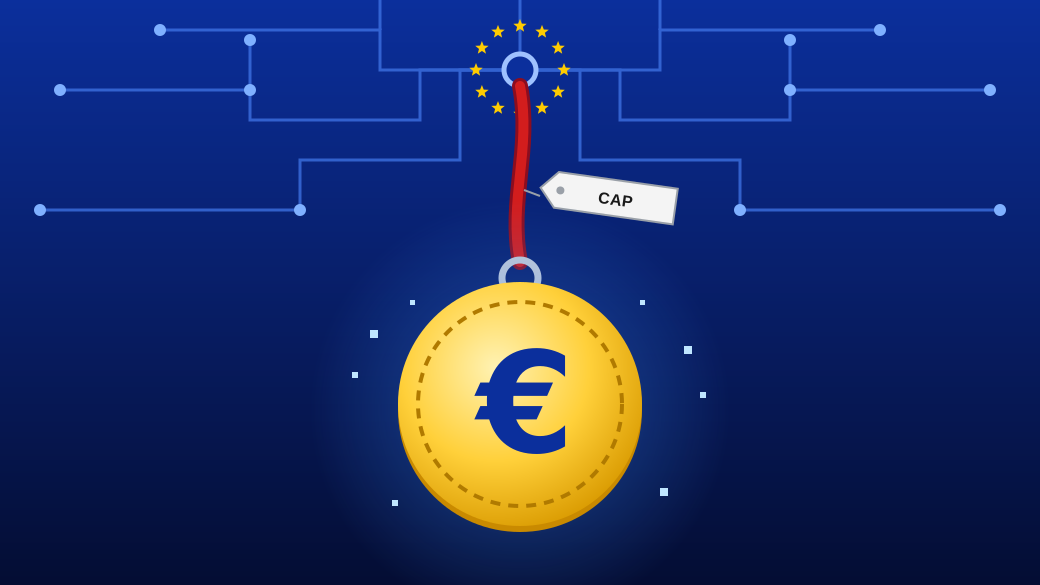
UPDATE, 19 October 2026: Talks are still going. The first trilogue (the three-way talks between Parliament, the Council and the Commission) took place on 13 July 2026 (Freshfields), and the second, on 10 September 2026, dealt with how banks and payment firms would be compensated (Ecommerce Europe). MLex reported that another meeting was planned for 30 September 2026 (MLex). We found no report of a deal: in a speech on 6 October 2026, the ECB still described the negotiations as under way, with the European Council asking for them to be concluded by the end of 2026 (ECB).
The European Parliament has voted to push the European Central Bank’s digital euro into negotiations. And Parliament’s version comes with a cap on how much of it you could hold.
On 9 July 2026, MEPs backed opening talks “with a large majority of 416 in favour, 169 against, and 22 abstentions,” Eunews reported. The first round of inter-institutional talks, a “trilogue” in Brussels-speak, is set for 13 July 2026.
EU governments, meeting as the Council, “had already agreed and finalised its negotiating position in December 2025.”
Just over two weeks earlier, on 23 June 2026, Parliament’s Economic and Monetary Affairs Committee adopted its position “by 43 votes to 14, with 1 abstention.”
Committee vote, plenary vote, negotiating table. Three steps in three weeks. The technocrats are in a HURRY.
Who Sets The Ceiling? Not You
Eunews reported that Parliament’s plan includes “a cap... on the amount of digital euros that each individual could hold.” The number? “Yet to be negotiated and determined.”
And who picks the number? According to PPC Land, “MEPs proposed that the EU ceiling should be set by the European Commission, based on ECB recommendations, and reviewed at least every two years.”
Under Parliament’s plan, the Commission decides how many digital euros you may hold. Not you.
A ceiling on your money, set in Brussels and reviewed on Brussels’ schedule. Who asked for that?
The Promises
Now for the promises. Parliament’s rapporteur, the MEP steering the file, says: “The digital euro will complement cash, never replace it.”
Under Parliament’s text, PPC Land reports, “The digital euro would not be programmable money,” and “The ECB would not have access to personal identification data under this model.”
Never replace cash. Not programmable. No ID data at the ECB. Save this page, and hold them to EVERY word.
Even the offline mode is built around their laundering fears. Offline payments would be proximity-only, to limit laundering, EU Perspectives reported.
So is this the first wire of the cashless control grid? Brussels swears it is not. Watch what the NWO puppets in Brussels do, not what they promise.
Not Law Yet
The digital euro is not law yet. The negotiators have only set a date to start talking.
The ECB already has a timeline. When its Governing Council moved the project to its next phase in October 2025, it said: “A final decision on whether to issue a digital euro will be taken by the Governing Council once the relevant European legislation has been adopted. If legislation is adopted in the course of 2026, a pilot exercise could start in 2027, and the Eurosystem should be ready for the potential first issuance of the digital euro in 2029.”
They have the dates. Do you have a plan?
Money With No Commission Ceiling
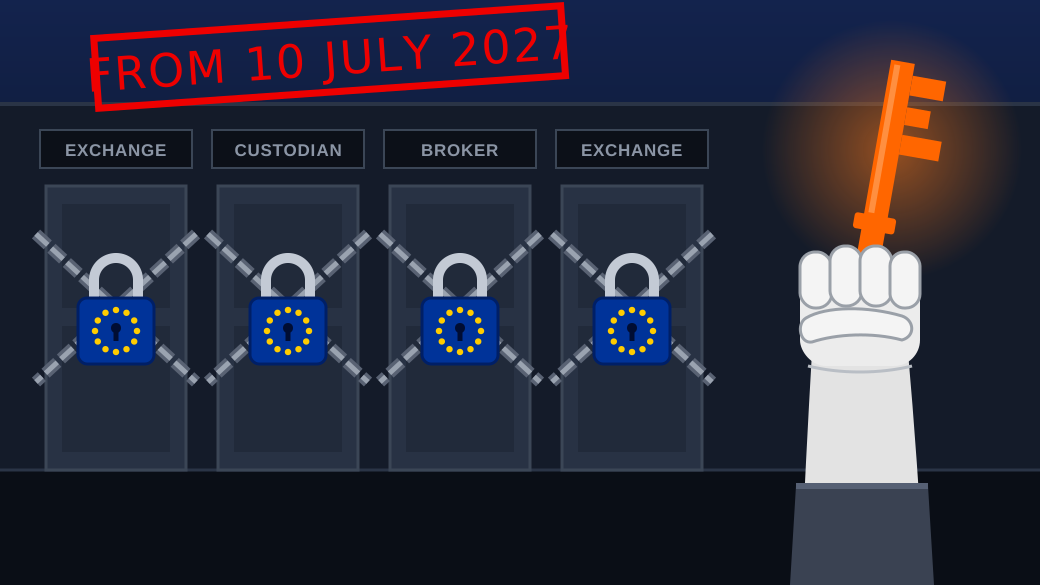
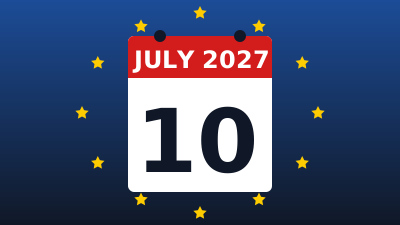
As we have warned, Brussels is also shutting private coins out of the licensed exchanges. That is a separate law, the EU’s Anti-Money Laundering Regulation. From 10 July 2027, it bars exchanges and custodians from handling “anonymity-enhancing coins.”
That law does not ban owning Monero or holding it in your own wallet.
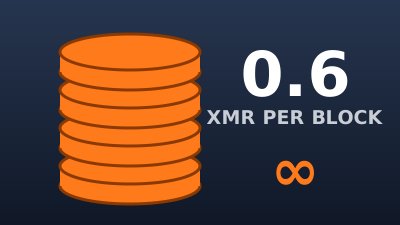
Monero hides the sender, the receiver and the amount. And no committee in Brussels reviews how much of it you may hold.
If you hold it, keep your own keys in a self-custody wallet such as Monero One. Full disclosure: the host built Monero One. He’s biased. He’s also right.
Want the wider picture first? The Monero One blog compares the main private cryptocurrencies.
Follow @MoneroOne on X and join the Resistance on Telegram (t.me/monero_one).
SOURCES
- Eunews: Parliament says yes to digital euro talks, negotiations start 13 July
- PPC Land: MEPs cap digital euro holdings after 43-14 committee vote
- Banka Slovenije copy of the ECB release: digital euro project moves into next phase
- EU Perspectives: Digital euro clears key hurdle
- EUR-Lex: AMLR, Regulation (EU) 2024/1624, official text
- AMLR Article 79, Official Journal text mirror (Springlex)
- AMLR Article 90, entry into force and dates (Springlex)
- Monero 0.18.0.0 release: ring size 16
- Moneropedia: Stealth address
- Monero September 2017 upgrade: RingCT enforced
- Freshfields: Digital euro enters trilogues
- Ecommerce Europe: Political and technical progress on the digital euro
- MLex: Digital euro talks to resume 10 September
- ECB: Money in the digital age (speech, 6 October 2026)
Join the resistance in style: get Monero One at no cost. It stays free.

Comments
Talk about this story with the resistance on Telegram.
Join the discussion